

Precious Metals
THE DURABILITY OF MOISSANITE VS DIAMOND: WHICH GEMSTONE TRULY LASTS LONGER?
A diamond cut is a key factor to consider when choosing your next piece of diamond jewelry.
By Chinwe, Chief Creative Officer
Unveiling the Truth: The Real Test of Durability — Moissanite vs. Diamond
In this deep-dive, we will explore the question that intrigues many gemstone buyers and jewelry enthusiasts: durability moissanite vs diamond — which gemstone truly lasts longer under real-world conditions? To give you clarity and confidence, we’ll tackle six major aspects:
Hardness & scratch resistance — how they fare on the Mohs scale and what that means for daily wear.
Toughness, cleavage & chipping risk — beyond hardness, how well each stone resists fractures, chips, and structural failure.
Wear, aging, and chemical resistance — how each stone handles exposure to heat, chemicals, everyday abuse, and long term wear.
Optical longevity: maintaining sparkle & polish over time — do they retain brilliance, resist dulling, or degrade?
Setting, mounting, and supporting durability — how metal settings, prongs, and mounting techniques influence real durability.
Real-life case studies & longevity in heirloom use — stories, lab tests, long term observations comparing moissanite and diamond in jewelry over decades.
In the conclusion, we’ll synthesize the evidence, give actionable guidance for your customers, and answer: in practice, which gemstone is more durable? By the end, your readers will understand durability moissanite vs diamond at a granular level and be empowered to choose wisely.
-
Empire Earring – 18K Sterling Silver
Sterling Silver
£434 Add to cart -
Flower Stud Diamond Earrings – 18K Gold – 1.7ct
18K Gold
£6,219 Add to cart -
Spun Link Necklace – 18K Gold
18K Gold
£4,844 Select options This product has multiple variants. The options may be chosen on the product page
Hardness & Scratch Resistance
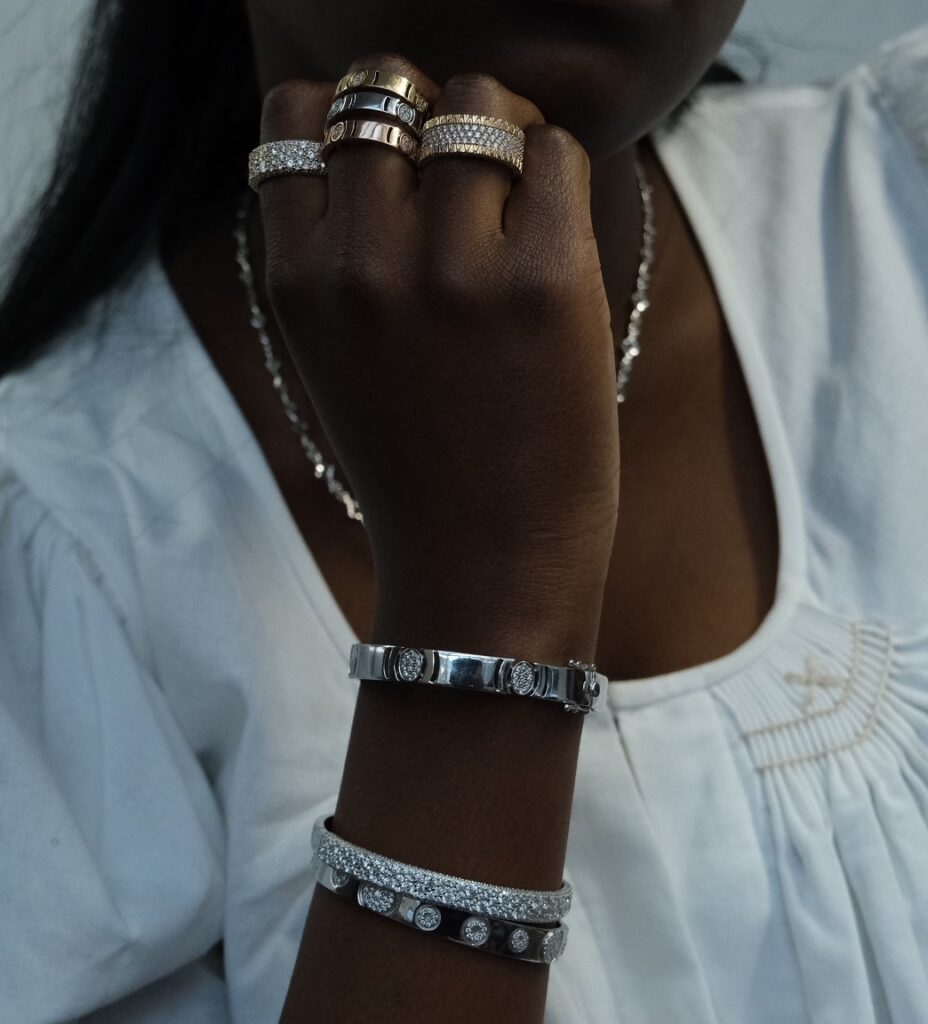
When discussing durabilitymoissanite vs diamond, the first and most cited metric is hardness — that is, how resistant the material is to scratching. On the Mohs hardness scale, diamond is the benchmark: it ranks 10, making it the hardest known naturally occurring mineral. Moissanite, on the other hand, typically ranks between 9.25 and 9.5 depending on the sample and producer.
What does that difference mean in practice? In theory, a diamond can scratch any gemstone (except another diamond), while moissanite can be scratched by diamonds or materials of equal or greater hardness. But the Mohs scale is a relative scale; the jump from 9.25 to 10 is significant in lab settings, but in everyday jewelry use, both are extremely high in hardness and both resist scratches from common metals, dust, and surface abrasion.
Thus, in terms of surface scratch resistance alone, diamond holds a theoretical advantage, but moissanite is not significantly inferior in many real use-cases. Most daily contact environments (rings brushing against countertops, occasional knocks) do not deliver the force or hardness to scratch a moissanite unless exposed to stronger minerals or gemstones.
However, there is nuance: the cut quality, faceting precision, and the smoothness of polish can influence how scratches appear or magnify under magnification. A deeply polished diamond with crisp facet edges might visually hide very minor marks better than a more aggressively faceted or less polished moissanite. Also, since moissanite is slightly softer, repeated micro-abrasion over many decades might in principle show some more subtle wear compared to diamond. Thus, though in pure hardness diamond is superior, moissanite remains quite robust.
In conclusion for this section: in evaluating durability moissanite vs diamond, hardness gives diamond a clear theoretical edge in scratch resistance. But moissanite’s hardness is high enough that for ordinary daily wear scenarios, the difference is modest and often barely perceptible to a non-gemmologist eye. The key is: diamond wins on scratch resistance, but moissanite is no weakling.
Toughness, Cleavage & Chipping Risk
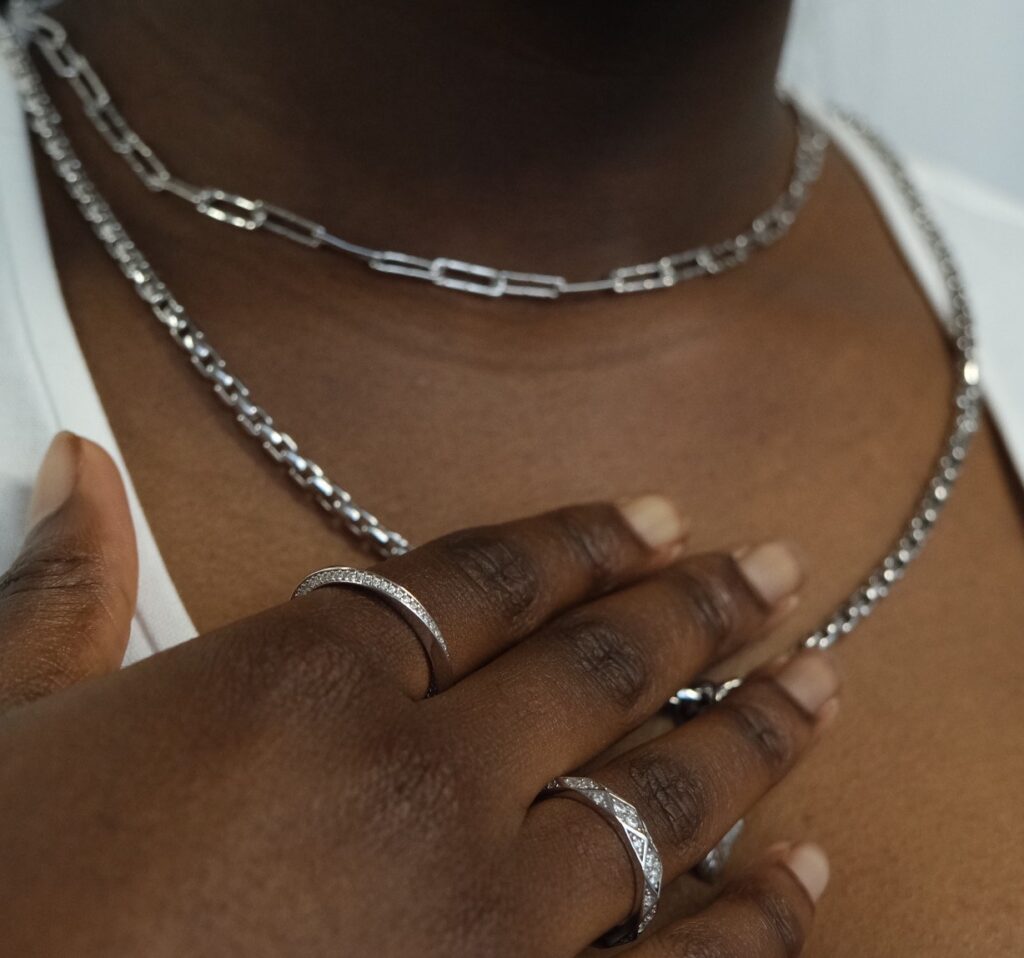
While hardness addresses scratch resistance, durability is not just about scratching — it’s also about toughness, resistance to fracture, and how a stone handles shocks, impacts, or stress. When considering durability moissanite vs diamond, toughness and cleavage behavior are vital.
Diamonds have a known property called cleavage — internal planes along which the crystal can split if struck properly. Because of this, despite being extremely hard, severely forceful or sharp impacts can cause a diamond to chip or cleave along those planes. Moissanite, by contrast, does not have the same well-defined cleavage planes, making it slightly more forgiving in shock impact in some directions.
According to gemological sources, moissanite’s structure gives it a resilience advantage in resisting catastrophic splitting, especially under certain impact angles. That said, moissanite is not invulnerable — it can chip or fracture under enough force, especially if the cut has sharp facet junctions or narrow prongs exposing edges. Some data suggests diamond tolerates higher pressure before fracture: diamond’s crush strength or ultimate fracture resistance is estimated higher than moissanite in lab tests.
One relevant comparison: IGS notes that diamond can survive about 14.6 PSI (million pounds per square inch) while moissanite is measured at around 7.6 PSI, meaning diamond can withstand more compressive pressure before failure in certain tests. That said, such tests often treat the stone under idealized conditions — actual jewelry geometries, facet cuts, and stress points vary. Also, toughness isn’t linearly correlated with that compressive strength.
In everyday wear, chipping or fracture risk arises mostly from knocks, abrupt collisions (e.g. dropping a ring onto a hard stone), or sideways impact on vulnerable facet corners or girdle edges. A diamond ring in such a scenario might cleave more easily, but that depends on orientation. Moissanite might resist splitting along a perfect plane better, but could still crack or chip if the force is extreme or the cut flawed.
In evaluating durability moissanite vs diamond, we must conclude that while diamond is harder, its cleavage lines represent a durability vulnerability; moissanite’s lack of strong cleavage gives it a marginal toughness advantage in some circumstances. That said, the difference is subtle. For most wearers, both stones—if well set and well protected—will resist chipping or fracture for decades under normal use. The tradeoff: diamond has scratch superiority, moissanite may have a slight edge in shock forgiveness under certain angles.
-
Ball Torque Bracelet – 18K White Gold
18K White Gold
£5,548 Select options This product has multiple variants. The options may be chosen on the product page -
Eternity Band Ring – 18K Gold 1.04ct
18K Gold
£2,372 Select options This product has multiple variants. The options may be chosen on the product page -
Spiralle Stud Earrings – 18K Gold – 0.23ct
18K Gold
£2,870 Add to cart
Wear, Aging, and Chemical Resistance
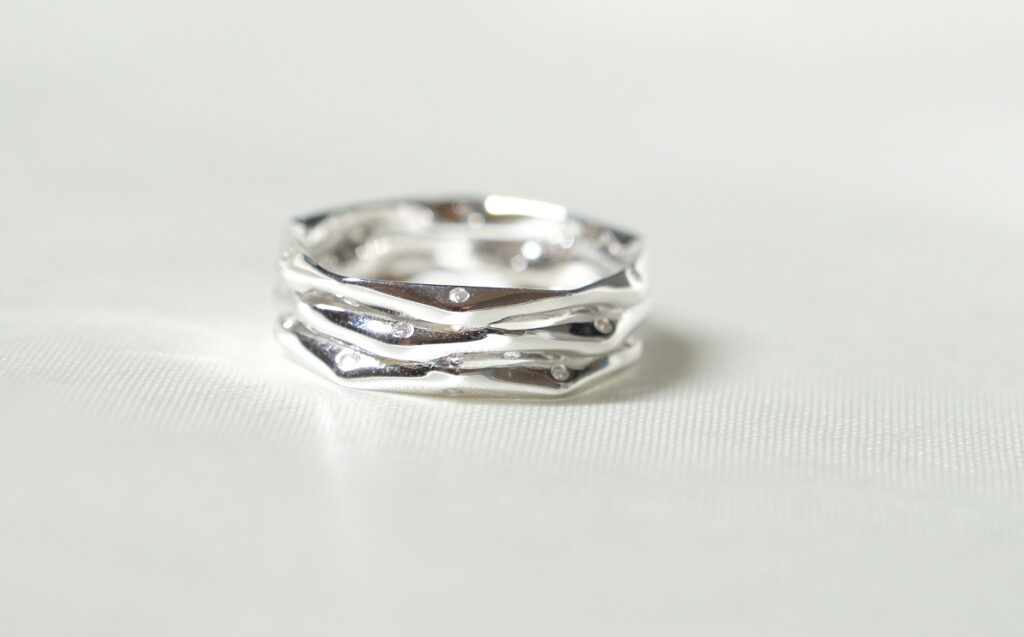
No gemstone exists in a perfect vacuum. Jewelry is exposed to heat, chemicals (cleaning agents, skin acids, cosmetics), temperature fluctuations, and repeated handling. In judging durability moissanite vs diamond, we must see how they endure environmental stresses and aging.
Chemical resistance
Diamonds are pure carbon — chemically inert under most jewelry conditions. They resist acids, bases, oxidation (at ambient conditions), and many cleaning agents. Moissanite, composed of silicon carbide (SiC), is also remarkably stable chemically. It does not degrade in typical household solutions, such as mild detergents, acids in perspiration, chlorine mixes, or soaps. Its chemical resilience is high and suitable for regular jewelry life.
However, moissanite is known to exhibit thermochromism at elevated temperatures: at gradually high heat (above certain thresholds, e.g. ~65 °C), moissanite may temporarily shift color before reverting, though such conditions are rare in standard wear. This is unlikely to matter in everyday life but is a theoretical constraint.
Heat & thermal stability
Diamonds conduct heat extremely well and handle thermal shocks quite well (unless stressed at cleavage planes). Moissanite also has good thermal conductivity and stability, though under extreme temperature swings or rapid heating, microfractures could in theory arise. In practice, both resist typical temperature variations (sunlight, body heat, ambient heating). There’s little documented evidence of moissanite discoloring or degrading with age due to temperature in normal jewelry context.
Aging, wear & micro abrasions
Over long periods (decades), micro-abrasions from dust, grit, or contact with harder particles may gradually reduce surface luster. Diamond is more resistant to gradual surface degradation by abrasion. Moissanite, being slightly softer, may accumulate minute wear more quickly in extreme cases. But in realistic use, that difference is expected to be minimal over a jewelry lifetime, especially with periodic cleaning and maintenance.
Long-term clarity & internal stability
One advantage for moissanite is that lab-grown stones are created under controlled conditions, leading to very consistent clarity and fewer internal flaws than many natural diamonds. This reduces risks of internal weakness or inclusions acting as crack initiation points. In diamonds, natural inclusions or internal stresses sometimes evolve over long periods. In practice, however, high quality diamonds are very stable too.
In summarizing this section: regarding wear, aging, and chemical resistance — both diamond and moissanite perform excellently under realistic jewelry conditions. Diamond still holds a slight edge in resisting micro-abrasion and absolute extreme conditions. But moissanite is robust enough that for durability moissanite vs diamond in everyday life, it is very competitive and fully practical for long-term use.
Optical Longevity — Maintaining Sparkle & Polish
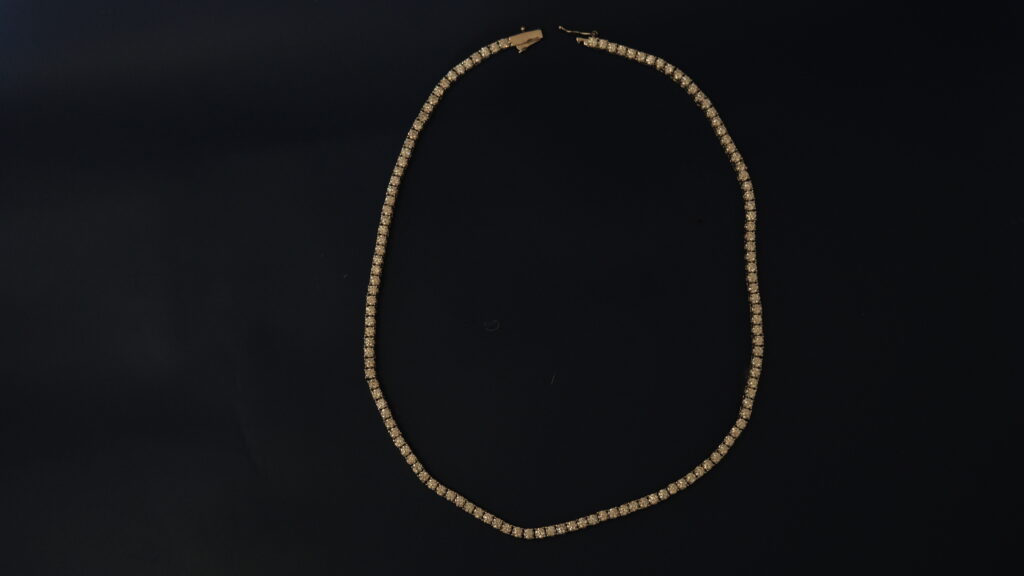
Beyond physical survival, durability in gemstones includes optical durability: the ability to retain brilliance, sparkle, and facet sharpness over time. A gemstone that lasts but loses its shine is less desirable.
Surface polish retention
Because diamond is harder, its facet edges and polished surfaces resist smoothing or rounding over time better. Minor wear tends not to dull the crispness of facet edges. Moissanite, being slightly softer, might, over very extended periods, show microscopic rounding or polish degradation in high-contact surfaces. This could slightly diminish brilliance if not maintained. That said, good moissanite jewelry cleaned and polished occasionally can sustain optical performance for a very long time.
Resist dulling, build-up, and microscopic pitting
Jewelry invariably accumulates oil, grime, film deposits, microscopic particles, and surface residue that dulls the appearance. Polishing and cleaning can restore shine for both stones. The capacity to buff or re-polish is essential for optical longevity. Diamond is more forgiving in repolishing — sharper, harder edges respond well to polishing. Moissanite can also be re-polished but might require more careful technique to avoid altering facet junctions due to its slightly softer nature.
Stability of brilliance and fire
Moissanite actually has a higher refractive index and dispersion (i.e., more “fire”) than diamond (by some measures) — thus initially it appears very sparkly and brilliant. Because of this, even minor optical wear might be less perceptible, as the starting brilliance is higher. However, if micro-scratches or surface dulling occur, the difference might gradually close.
In the long term, a well-maintained moissanite can retain sparkle comparable to diamond for decades. For durability moissanite vs diamond, diamond keeps sharper faceting longer under abuse, but moissanite’s inherent brilliance gives it headroom to resist perceptible decline.
Realistic optical lifespan
In real use (rings worn daily, occasional cleaning), sapphire, quartz, and lower hardness gems might gradually lose sparkle over many years. But for diamond and moissanite, with occasional maintenance, optical performance remains excellent for a lifetime. The difference is subtle. The practical message: optical durability is not a limiting factor for either gemstone in well-made jewelry.
Thus, in the context of durability moissanite vs diamond, optical longevity moderately favors diamond for resisting facet wear, but moissanite is fully competitive — the difference is not glaring for most wearers.
-
Micro Pave Bracelet – 18K White Gold – 1.13ct
18K White Gold
£8,609 Select options This product has multiple variants. The options may be chosen on the product page -
Tennis Bracelet – 18K Gold – 12.7ct
18K Gold
£44,964 Select options This product has multiple variants. The options may be chosen on the product page -
Tennis Bracelet – 18K White Gold – 12.7ct
18K White Gold
£44,964 Select options This product has multiple variants. The options may be chosen on the product page
Setting, Mounting & Supporting Durability
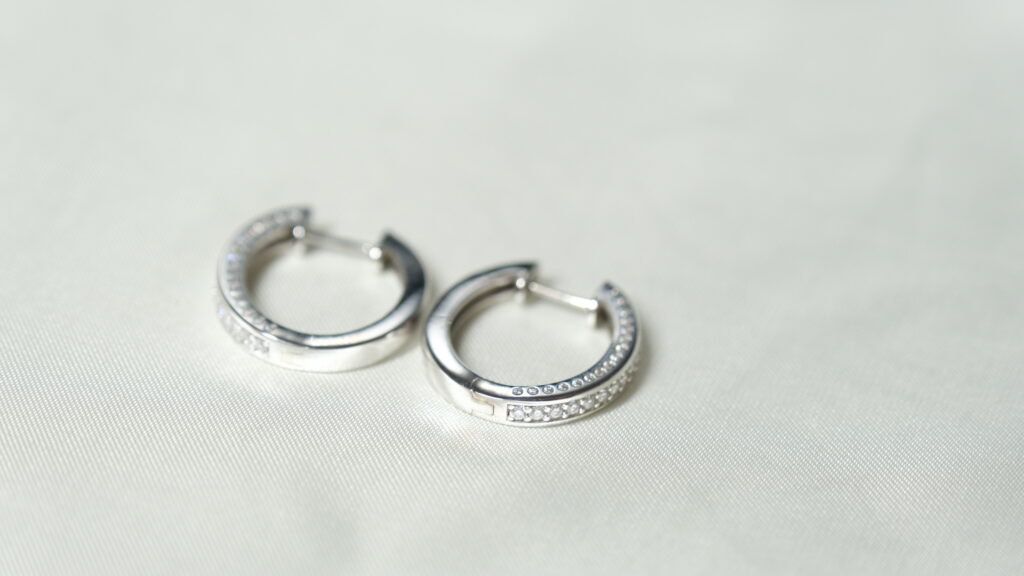
Even the hardest gemstone can fail if its metal setting or mounting is weak. The real-world durability of durability moissanite vs diamond depends heavily on how each is mounted, the strength of prongs, girdle protection, and design choices.
Prongs, claws, bezels — protection matters
Exposed edges, sharp corners, or thin prongs increase risk of chipping or knocks. A well-designed setting (e.g. bezel, vaulted prongs, protective halo) mitigates risk irrespective of gemstone hardness. For both moissanite and diamond, stronger settings prolong life. If your customer disregards setting quality, even a diamond is vulnerable. Therefore, in comparative durability, setting choice is as important (or more) than inherent gemstone toughness.
Girdle thickness and facet junction design
Gemstones with thin girdles or sharp, acute facet junctions (especially princess cuts or fancy cuts with delicate corners) are more prone to edge chipping. For moissanite, given its slightly lower toughness, designers often avoid overly aggressive cuts that concentrate stress. For diamond, more extreme cuts are feasible, but they must be supported. Thus in durability moissanite vs diamond, moissanite’s safer cuts plus protective settings can mitigate its theoretical disadvantage.
Metal hardness & wear
Precious metals (gold, platinum, silver) themselves wear over time. If prongs thin, loosen, or bend, the gemstone may shift and hit against adjacent surfaces. Even a perfect stone may suffer impact if setting fails. A stronger stone (diamond) won’t help if the setting lets it flop. Thus regular inspection, retightening, and maintenance are crucial for both. The difference in inherent gemstone durability is moot if the mounting fails first.
Retrofitting & repairability
One advantage of durable gemstones is that they can survive repair, resizing, re-setting or repolishing. Diamonds are well known to survive such jewelry work with minimal risk if handled by a skilled jeweler. Moissanite is increasingly robust and jewelers now commonly cut, re-set, polish, and re-adjust moissanite settings. However, because it’s less common, some jewelers may be less experienced handling moissanite, which can introduce risk from mishandling. Over time, as moissanite popularity grows, this gap is narrowing.
Real world durability from setting synergy
In practice, the longevity of a gemstone in jewelry is a function of both the gemstone and its support system. Even a perfect diamond set in flimsy prongs can fall or get damaged. Equally, a moissanite well protected in a robust setting may last longer in actual wear than a diamond in a marginal mount. So in assessing durability moissanite vs diamond, one must see them as parts of a system. If you pair moissanite with strong protective settings, you largely close the durability gap.
In sum: while diamond retains a modest intrinsic advantage in strength, well-designed settings, proper maintenance, and intelligent cut choices narrow the real-world difference. For your jewelry customers, emphasize that durability moissanite vs diamond is not just about the stone — the mounting, design, and care dictate the real lifespan.
Real-Life Cases & Long-Term Observations
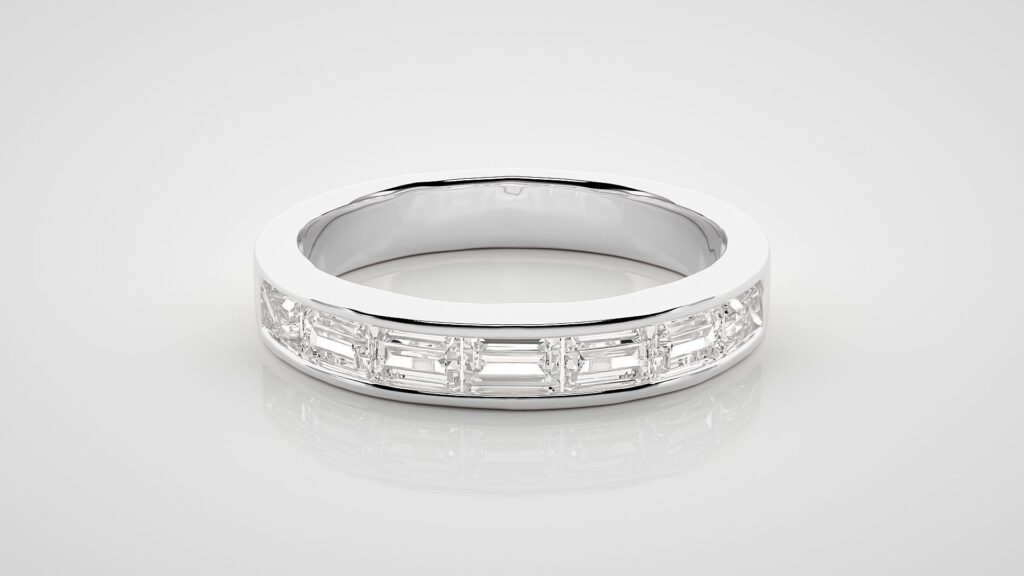
Theory and lab data are invaluable, but nothing persuades like long-term real-life evidence. In assessing durability moissanite vs diamond, let’s look at case studies, anecdotal reports, and observed jewelry performance over years and decades.
Heirloom diamond jewelry
Diamond jewelry that has survived for centuries or multiple generations is well-known — wedding rings, pendants, and heirloom pieces in museum collections remain brilliant after decades, often only requiring cleaning. This real-world track record gives diamond a proven durability reputation. Many antique diamonds show wear on the metal, not on the stone. Some show micro-scratches, but facet structure remains largely intact.
Emerging moissanite longevity stories
Moissanite jewelry has not had centuries of history, but in the past few decades, many owners report that their moissanite engagement rings remain visually pristine after years of daily wear. Reviews and community forums repeatedly affirm that moissanite resists clouding, scratching, and loss of brilliance. Some even say, “the moissanite is perfectly durable for everyday wear.”
Brilliant Earth and James Allen compare moissanite vs diamond in their blogs, acknowledging that while diamond remains the harder stone, moissanite has held up well in customer use over years. These qualitative reports lend confidence that real-world durability moissanite vs diamond is not grossly different, at least over a decade or two.
Laboratory & gem society testing
Gemological institutions like the Gem Society note that moissanite is the second-hardest gemstone material after diamond and suggest that unless stored next to diamond jewelry, scratching a moissanite is unlikely. IGS also notes the comparative fracture strength measures and cautions that chipping is possible in both. These expert assessments align with anecdotal reports that moissanite has acceptable long-term durability.
Comparative failures & rarity
In forums, diamond chips or fractures are occasionally discussed — especially for stones with flaws, poor cuts, or weak settings. Moissanite failures are rarely documented, likely because the material is newer and fewer long-term wearers exist. But some negative blog posts caution that moissanite is slightly softer and could be scratched or chipped under extreme abuse. This suggests that the risk is nonzero but remains low.
Practical takeaway from longevity cases
What emerges is that both gemstones, when used in good settings and cared for, last for decades. Diamond enjoys centuries of proven durability; moissanite has a shorter but increasingly robust track record. In real use, many customers find no practical difference for typical human lifespans. Thus, in the debate of durability moissanite vs diamond, long-term evidence supports the notion that moissanite is durable enough for life-long jewelry use, and diamond retains a slight but not dramatic edge in certain extreme wear conditions.
-
Sale!
Knot Ring – 18K Rose Gold
18K Rose Gold
£550 Select options This product has multiple variants. The options may be chosen on the product page -
Sale!
Love Ring – 18K White Gold
18K White Gold
£550 Select options This product has multiple variants. The options may be chosen on the product page -
Serene Ring – 18K White Gold 0.20ct
18K White Gold
£3,666 Select options This product has multiple variants. The options may be chosen on the product page
Enduring Brilliance: The Final Word on Moissanite vs. Diamond Durability
In the end, when we unspool all the evidence under the lens of durability moissanite vs diamond, the answer is: diamond holds the theoretical upper hand, but moissanite is no weak contender — and in many real settings, the difference is subtle.
Diamond undeniably wins in pure hardness (scratch resistance), maximal compressive strength, and long-established history of surviving extreme conditions. But moissanite is close behind in hardness, offers some advantage in resisting cleavage-based fractures, and, thanks to its lab‐grown consistency, often has fewer internal flaws. In real-world jewelry use — with proper settings, protection, and maintenance — moissanite proves extremely robust in wear, resists chemical and heat stress, and retains brilliance over long periods.
The real-life difference between these gemstones often comes down to design, mounting quality, care, and handling. A poorly mounted diamond may fail faster than a well-mounted moissanite. A clean, secure design mitigates many of moissanite’s slight disadvantages.
For jewelry buyers, the pragmatic takeaway is this: if you have the budget and want the historically “ultimate” gemstone, diamond is excellent. But if you want value, visual brilliance, and durability that is fit for lifetime use, moissanite is a compelling, practical, and durable alternative. Customers who choose moissanite with strong settings, periodic professional checkups, and occasional polishing can expect a beautiful, long-lasting gemstone.
If your jewelry site offers both, you can confidently inform your readers: durability moissanite vs diamond is not a clear cut “diamond always wins” battle in everyday life. Rather, it is a nuanced balance of hardness, design, and care — and moissanite often passes the test for longevity in practical use.