

Precious Metals
HOW TO MIX GOLD AND SILVER JEWELRY EXPERTLY IN 2026
A diamond cut is a key factor to consider when choosing your next piece of diamond jewelry.
By Chinwe, Chief Creative Officer
For decades, the fashion rulebook insisted that mixing metals was a cardinal sin—a styling mistake that signaled confusion rather than confidence. Gold stayed with gold. Silver remained with silver. And anyone who dared to blur those boundaries risked looking accidentally disheveled rather than intentionally chic.
But 2026 has arrived with a different manifesto entirely.
The modern jewelry wardrobe doesn’t segregate warm from cool, yellow from white, or vintage from contemporary. Instead, it celebrates the tension between opposites—the visual dynamism that happens when gold and silver jewelry meet on the same wrist, neck, or hand. This isn’t about abandoning all styling principles or throwing on every piece you own. It’s about understanding that expertly mixed metals create a kind of stylistic authority that feels infinitely more sophisticated than perfectly matched sets ever could.
Today’s most compelling jewelry moments don’t happen in matching suites. They happen when you mix gold and silver jewelry with intention—layered contrasts like a chunky silver cuff worn alongside delicate gold bangles. In the stacked rings that move fluidly between rose gold, white gold, and sterling silver across multiple fingers. In the deliberate asymmetry of gold hoops on one ear and silver studs on the other. The old rules didn’t disappear because they were wrong—they disappeared because they were incomplete. They assumed that visual harmony meant sameness, when in reality, the most arresting combinations often come from intentional contrast.
This shift reflects something larger than jewelry trends. It’s the cultural movement toward individual expression over prescriptive formulas, the influence of street style photographers capturing real people who stack and layer with abandon, Gen Z’s wholesale rejection of “you can’t wear that,” and the rise of jewelry as a form of personal narrative rather than passive accessory. Runways from Chloé to Bottega Veneta have showcased mixed-metal styling for seasons now. Instagram’s most followed jewelry influencers build entire feeds around the art of combining warm and cool tones. The message is clear: mixing gold and silver jewelry isn’t just acceptable—it’s the defining approach of confident, contemporary style.
But mastery requires more than permission. It requires understanding the foundational principles that separate intentional mixed-metal styling from chaotic excess. It demands knowing when to anchor with one dominant metal and when to distribute both equally. It means recognizing that proportion, balance, and visual cohesion matter more than ever when you’re working across metal families. And it requires the self-assurance to trust your eye, build combinations that feel authentically yours, and ignore anyone still clinging to outdated matching mandates.
What follows are the expert principles that will transform how you approach mixing gold and silver jewelry—not as a risky experiment, but as a learnable, immediately wearable skill that makes every piece in your collection exponentially more versatile, modern, and utterly you.
The difference between expertly mixed metals and a styling misstep isn’t the combination itself—it’s the presence or absence of intention. When done well, mixing gold and silver jewelry looks deliberate, curated, and visually purposeful. When done poorly, it looks like you grabbed whatever was closest in your jewelry box without a second thought.
The Core Principle:
Mixing gold and silver jewelry works when there’s an underlying logic to your choices. That logic might be balance (equal distribution of both metals), dominance (one metal leads while the other accents), or cohesion (pieces share similar design languages, weights, or finishes even if their colors differ). What matters is that someone looking at you can sense the thought behind the combination—even if they can’t articulate exactly what makes it work.
What This Looks Like in Practice:
If you’re wearing a substantial gold chain necklace, adding a single delicate silver ring creates intentional contrast. The gold dominates. The silver provides a cool-toned counterpoint. The combination feels considered. Conversely, wearing three chunky gold rings, two heavy silver bracelets, a rose gold watch, and multiple necklaces in all three metals simultaneously can veer into visual chaos—not because mixing is wrong, but because there’s no clear focal point or organizing principle.
Common Mistakes to Avoid:
The most frequent error is treating mixed-metal styling as permission to wear everything at once. Just because you can combine metals doesn’t mean you should combine all your metals in a single outfit. Another pitfall: mixing metals accidentally rather than intentionally. If you forget you’re wearing your silver wedding band and throw on gold earrings without thinking, that’s not styling—it’s happenstance. The goal is conscious choice.
The Psychological Impact:
When your mixed metals feel intentional, they signal style confidence. People register that you understand contemporary fashion language, that you’re not bound by outdated rules, and that you possess enough aesthetic self-assurance to build combinations that feel personally authentic. This creates a subconscious impression of polish and authority—the sense that you know exactly what you’re doing, even if observers can’t pinpoint why your jewelry looks so effortlessly right.
Budget-Conscious Strategy:
You don’t need an enormous collection to mix gold and silver jewelry expertly. Start with versatile foundational pieces in both metals—simple chains, classic hoops, stackable rings—and build combinations by varying which metal dominates each day. A $40 silver chain and a $50 gold bangle can create dozens of different looks depending on what else you add.
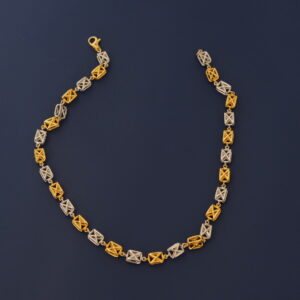
One of the most reliable frameworks for mixing gold and silver jewelry is the anchor-and-accent approach. Rather than distributing both metals equally across every part of your body, you allow one metal to dominate the overall look while the other appears in smaller, strategic doses.
The Core Principle:
Visual balance doesn’t always mean equal distribution. Often, it means creating a clear hierarchy where one metal establishes the tonal foundation and the other provides contrast. This prevents the look from feeling cluttered or indecisive while still delivering the dynamic energy of mixed metals.
What This Looks Like in Practice:
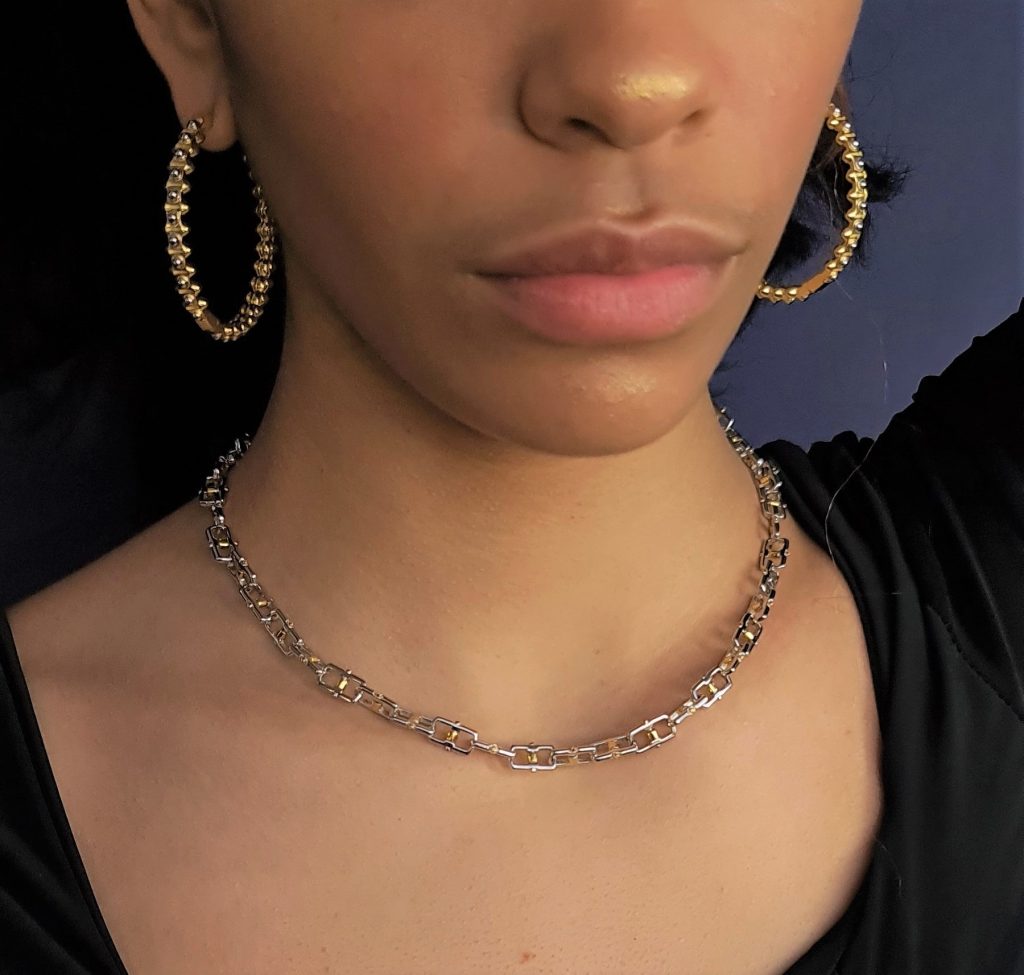
Imagine you’re wearing multiple gold pieces: a gold watch, gold hoop earrings, and two stacked gold necklaces. Your anchor metal is gold. To introduce silver, you might add a single silver cuff bracelet or a delicate silver ring. The silver doesn’t compete with the gold—it complements it. The combination feels cohesive because there’s a dominant tone with an intentional cool-metal accent.
Alternatively, you could anchor with silver—silver chain necklaces, silver rings, silver earrings—and accent with a single warm piece like a gold bangle or a rose gold ring. The silver establishes the overall aesthetic. The gold adds warmth and visual interest without overwhelming the foundation.
When to Use Equal Distribution:
There are moments when balanced, equal distribution of both metals works beautifully—particularly in maximalist or deliberately symmetrical looks. If you’re stacking five rings and alternating between gold and silver across your fingers, the rhythm itself becomes the organizing principle. If you’re layering multiple necklaces and deliberately mixing chain colors, the layering technique creates cohesion even with equal metal representation. But these approaches require more advanced styling confidence and a keen eye for proportion.
Common Mistakes to Avoid:
The anchor-and-accent framework falls apart when you introduce too many accent pieces. If you anchor with gold but add three different silver necklaces, two silver bracelets, and silver earrings, you’ve essentially created two competing anchor metals—and the look loses clarity. Keep accent pieces minimal and purposeful.
The Psychological Impact:
Anchoring provides visual ease. It gives the eye a place to rest, a tonal baseline that makes the overall combination feel grounded rather than chaotic. When someone looks at you, they register the dominant metal first, which creates a sense of coherence. The accent metal then provides that spark of modernity and unexpected contrast that makes the look memorable.
Budget-Conscious Strategy:
If you already own a substantial collection in one metal, you don’t need to rebuild from scratch. Simply invest in a few high-quality accent pieces in the opposite metal. A single statement silver bracelet can transform an all-gold wardrobe. One beautiful gold chain can elevate an entirely silver collection.
-
Empire XL Earrings – 18K Vermeil Gold
Sterling Silver
£650 Add to cart -
Linear Gap Necklace – 18K Vermeil Gold
Sterling Silver
£918 Select options This product has multiple variants. The options may be chosen on the product page -
Molten Necklace – 18K Yellow Gold, White Gold
18K Yellow Gold, White Gold
£7,891 Select options This product has multiple variants. The options may be chosen on the product page
Necklace layering is where mixing gold and silver jewelry often feels most instinctive—and where mistakes can be most visible. When done expertly, layering gold and silver jewelry around the neck creates dimension, movement, and a sense of personal curation that feels distinctly 2026.
The Core Principle:
Successful mixed-metal necklace layering relies on varying chain weights, lengths, and visual textures while maintaining an underlying sense of balance. The goal is controlled asymmetry: combinations that feel dynamic and intentional rather than accidentally mismatched.
What This Looks Like in Practice:
Start with a delicate gold chain at your collarbone—something thin and understated. Add a slightly longer silver chain with a small pendant that falls mid-chest. Layer a third piece, perhaps a chunkier gold chain or a beaded strand, that sits between the two in length. The varying metals create visual interest. The different lengths prevent tangling and create depth. The mix of delicate and substantial chains establishes rhythm.
Alternatively, you might layer two silver chains close together at similar lengths, then add a single longer gold chain as the focal point. The silver creates a cohesive base. The gold provides contrast and draws the eye downward.
Finish and Texture Considerations:
Mixing polished gold with hammered silver, or pairing a rope-texture gold chain with a sleek silver snake chain, adds another dimension of visual interest. The metals provide color contrast; the textures and finishes provide tactile and stylistic contrast. This layered approach to contrast—color and texture—creates combinations that feel considered and sophisticated.
Common Mistakes to Avoid:
Wearing too many statement necklaces when mixing gold and silver jewelry simultaneously can overwhelm your neckline. If every chain is chunky, bold, or heavily embellished, the combination competes with itself rather than building cohesion. Similarly, wearing chains that are too similar in length—especially in different metals—can make them blend together awkwardly rather than creating intentional layers. Aim for at least two inches of separation between chain lengths.
The Psychological Impact:
Expertly layered mixed-metal necklaces signal that you understand contemporary jewelry trends and possess the confidence to execute them. The look feels editorial, current, and personally expressive. People notice the dimensionality around your neckline even if they don’t consciously register what makes it work.
Budget-Conscious Strategy:
Start with versatile chain necklaces in both metals at different standard lengths: 16 inches, 18 inches, 20 inches. These foundational pieces can be mixed, matched, and layered infinitely depending on your outfit and mood. Add pendants strategically to create focal points without buying entirely new necklaces.
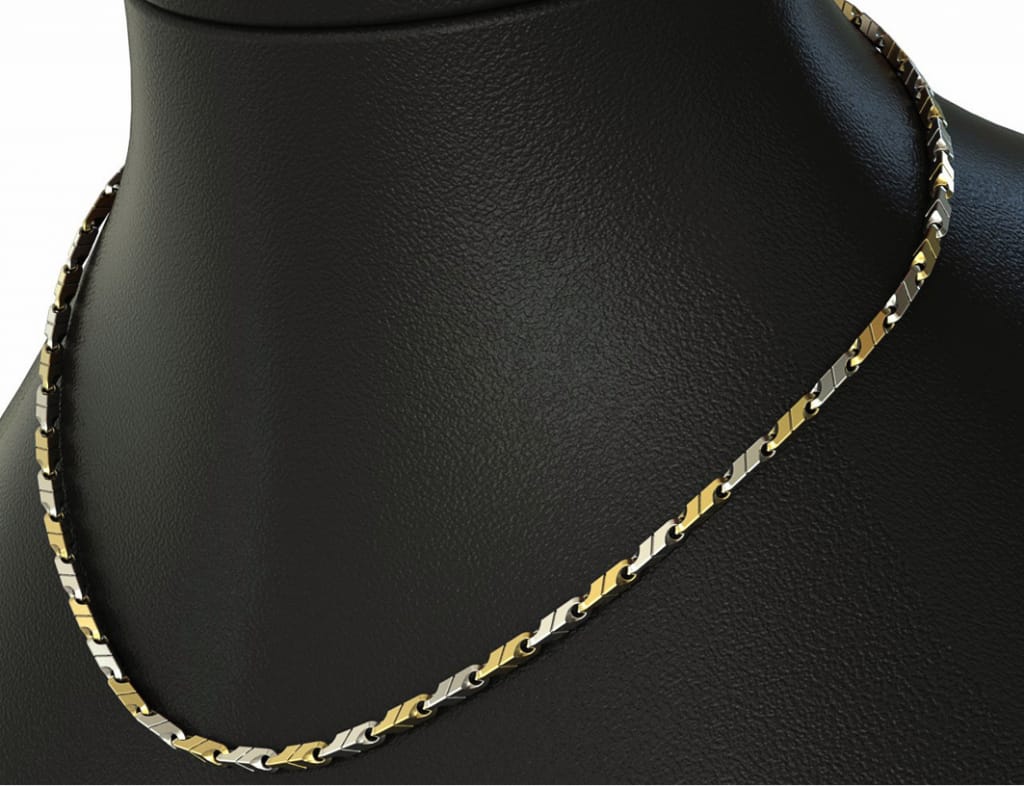
Hands and wrists are natural canvases for mixing gold and silver jewelry, but they’re also where excess can quickly become clutter. The key to stacking rings and bracelets across gold and silver jewelry families is knowing when to mix freely and when to exercise restraint.
The Core Principle:
Stacking works when there’s either visual rhythm (alternating metals in a deliberate pattern) or intentional imbalance (one metal dominates while the other provides accent). What doesn’t work is random distribution with no underlying structure.
What This Looks Like in Practice:
For rings, you might wear two thin gold bands on your index finger, a single silver ring on your middle finger, and a rose gold signet on your pinky. The gold establishes presence. The silver provides contrast. The rose gold bridges both warm and cool tones. The combination feels curated because there’s variety in placement, metal, and ring style—but it’s not overwhelming.
For bracelets, consider stacking a chunky silver cuff with two delicate gold bangles. The cuff provides visual weight and cool-toned dominance. The gold bangles add warmth and movement. The combination feels balanced because the silver’s substantial presence is offset by the gold’s quantity and delicacy.
Mixing Metals Within a Single Stack:
Some of the most compelling stacks involve wearing multiple rings on one finger—alternating between gold and silver bands, or mixing white gold with yellow gold and sterling silver. This approach works when the rings share similar widths and profiles. If one ring is a massive cocktail piece and the others are whisper-thin, the stack loses cohesion.
Common Mistakes to Avoid:
Wearing every ring you own on every finger can veer into costume rather than curated style. Similarly, stacking too many bracelets in mismatched metals, widths, and styles can make your wrist look chaotic rather than intentionally layered. Aim for three to five total rings across both hands, and three to four bracelets on one wrist, adjusting based on the scale and presence of individual pieces.
The Psychological Impact:
Expertly stacked mixed-metal rings and bracelets create a sense of effortless individuality. They suggest you’ve collected pieces over time, that each has meaning or aesthetic value, and that you’re confident enough to combine them in ways that feel authentically personal. This reads as style maturity—someone who isn’t following rigid rules but creating their own visual language.
Budget-Conscious Strategy:
Invest in versatile, stackable foundational pieces: simple bands in various widths in both gold and silver. These can be worn alone, together, or mixed with any statement rings you acquire over time. A $30 set of thin stacking bands can create endless combinations with a single $100 statement piece.
-
Aku Earrings – 18K Gold, White Gold
£2,813 Add to cart -
Button Chain Necklace – 18k Yellow,White Gold
18K Yellow Gold, White Gold
£7,055 Select options This product has multiple variants. The options may be chosen on the product page -
Katy Bracelet II – 18K Gold, White Gold
18K Yellow Gold, White Gold
£2,031 Select options This product has multiple variants. The options may be chosen on the product page
Earrings present unique considerations when mixing gold and silver jewelry because they’re visible in pairs—and the decision to match or mismatch carries different visual weight than other jewelry categories.
The Core Principle:
Mixing metals in earrings works beautifully when done with clear intention, but it requires more confidence than mixing metals across separate jewelry categories (like wearing gold rings with silver necklaces). The question isn’t whether you can mix—it’s how you mix.
What This Looks Like in Practice:
One approach: wear identical earring styles in different metals. Gold hoops in your left ear, silver hoops in your right. The mismatch is deliberate and symmetrical in form even while asymmetrical in color. This signals intentional mixed-metal styling.
Another approach: if you have multiple piercings, wear gold studs in your first holes and silver hoops in your second holes (or vice versa). The metals mix within the same ear, creating a curated, contemporary ear stack that feels distinctly 2026.
A more restrained approach: keep both earrings in the same metal family (both gold or both silver) and introduce the opposite metal through necklaces, rings, or bracelets. This creates mixed-metal styling without requiring the earrings themselves to mismatch.
When Symmetry Works Better:
If your earrings are large, dramatic statement pieces—chandelier earrings, bold sculptural designs, heavily embellished drops—keeping them in the same metal often feels more intentional. The earrings themselves provide enough visual presence that introducing metal mismatch can feel excessive. Let them anchor in one metal, then mix through other jewelry categories.
Common Mistakes to Avoid:
Wearing completely different earring styles in different metals can look accidental rather than intentional unless executed with exceptional confidence. A delicate gold stud in one ear and a chunky silver hoop in the other might feel unbalanced unless you’re deliberately pursuing an avant-garde asymmetrical aesthetic. If you’re new to mixed-metal earrings, start with identical styles in different metals.
The Psychological Impact:
Mismatched metal earrings signal high style confidence. They communicate that you understand current trends, aren’t afraid of asymmetry, and possess the aesthetic authority to make unconventional choices work. When done well, they become a signature element that people remember and associate with your personal style.
Budget-Conscious Strategy:
Buy classic earring styles—simple hoops, studs, huggie earrings—in both gold and silver. These foundational pairs cost relatively little but multiply your styling options exponentially. You can mismatch them, wear them separately with opposite-metal jewelry, or keep them matched depending on your mood.
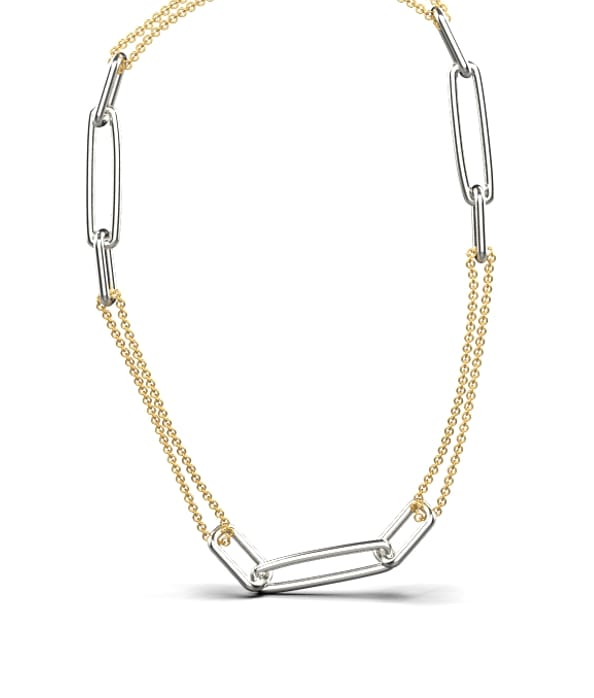
6. Two-Tone and Tri-Color Jewelry: The Natural Bridge Between Gold and Silver
If mixing separate gold and silver jewelry pieces feels intimidating, two-tone and tri-color jewelry offers an elegant entry point. These pieces inherently combine metals within a single design, making them visual permission slips for broader mixed-metal styling.
The Core Principle:
Two-tone pieces (combining two metals, often gold and silver or white gold and yellow gold) and tri-color pieces (incorporating three metals, typically yellow gold, white gold, and rose gold) serve as stylistic bridges. They train your eye to see mixed metals as cohesive, and they provide natural anchors around which to build additional mixed-metal combinations.
What This Looks Like in Practice:
A Cartier Love bracelet in two-tone gold combines warm and cool metals in a single iconic piece. Wearing it gives you automatic permission to add separate gold and silver jewelry elsewhere because the bracelet itself establishes mixed metals as intentional. You might pair it with silver rings and gold earrings, knowing the bracelet visually ties everything together.
Similarly, a tri-color gold ring—where rose, yellow, and white gold intertwine—can anchor an entire mixed-metal look. You can pull rose gold earrings, a yellow gold necklace, and a white gold bracelet into the same outfit because the ring demonstrates that all three metals can coexist harmoniously.
How Two-Tone Pieces Expand Styling Versatility:
Owning even one high-quality two-tone piece exponentially increases your jewelry wardrobe’s flexibility. That piece works with all-gold outfits, all-silver outfits, and every mixed-metal combination in between. It becomes the universal translator in your collection—the piece that makes everything else more wearable together.
Common Mistakes to Avoid:
Don’t assume that wearing a two-tone piece obligates you to mix metals everywhere else. Sometimes a two-tone watch or bracelet provides all the mixed-metal interest your outfit needs, and keeping everything else in a single metal family lets that piece shine. Other times, the two-tone piece is just the beginning, and you layer additional mixed metals around it. Read the room—and your overall look.
The Psychological Impact:
Two-tone and tri-color jewelry pieces communicate design sophistication and intentional investment. They suggest you value versatility, that you think strategically about your wardrobe, and that you appreciate the aesthetic complexity of combined metals. They’re conversation pieces that elevate casual outfits and anchor formal ones.
Budget-Conscious Strategy:
You don’t need Cartier to access two-tone styling. Many contemporary jewelry brands offer affordable two-tone pieces—stacking rings, simple pendants, mixed-metal cuffs—that provide the same visual bridging effect at accessible price points. Prioritize classic designs that will remain relevant beyond seasonal trends.
-
Clustered Alternate Chain Necklace II – 18K Gold, White Gold
18K Yellow Gold, White Gold
£5,548 Select options This product has multiple variants. The options may be chosen on the product page -
Diamond Hoop Earrings – 18K Rose Gold – 1.24ct
18K Rose Gold
£2,870 Add to cart -
Katy Bracelet II – 18K Gold, White Gold
18K Yellow Gold, White Gold
£2,031 Select options This product has multiple variants. The options may be chosen on the product page
7. Skin Undertones, Finishes, and the Nuances of Gold and Silver Jewelry Pairing
Understanding how gold and silver jewelry interact with your skin’s undertones, and how different metal finishes affect overall aesthetic, adds another layer of mastery to mixed-metal styling.
The Core Principle:
While the old rule that warm undertones must wear gold and cool undertones must wear silver is thankfully obsolete, understanding your natural coloring still helps you make intentional choices about which metal dominates, which finishes you prefer, and how to balance warmth and coolness across your jewelry.
Warm Undertones and Mixed Metals:
If you have warm undertones (your veins appear greenish, you tan easily, gold jewelry traditionally looks most natural on you), you might choose to anchor with gold and accent with silver. This lets your natural warmth shine while the silver provides contemporary contrast. You might also gravitate toward brushed or matte silver finishes, which feel softer and less starkly cool than high-polish silver.
Cool Undertones and Mixed Metals:
If you have cool undertones (blue-toned veins, you burn before tanning, silver traditionally flatters you most), anchoring with silver and accenting with gold creates harmony. The cool-toned foundation complements your natural coloring, while warm gold accents add richness and prevent the look from feeling too icy. You might prefer high-polish gold or rose gold, which feels less intensely warm than yellow gold.
Neutral Undertones: The Mixed-Metal Ideal:
If you have neutral undertones (you can wear both gold and silver equally well, your veins appear blue-green), you possess maximum flexibility for mixing metals. You can distribute gold and silver equally, alternate freely between which metal anchors and which accents, and experiment with every possible combination without worrying about warmth or coolness clashing with your skin.
Finish Considerations:
Polished, high-shine metals create maximum contrast when mixed—gleaming gold next to gleaming silver feels crisp and deliberate. Brushed, matte, or hammered finishes soften that contrast, creating a more subdued, organic mixed-metal effect. Mixing finishes (polished gold with brushed silver, for example) adds textural depth that enhances visual interest beyond color alone.
Rose Gold’s Special Role:
Rose gold occupies a unique space in mixed-metal styling because it contains both warm (gold, copper) and cool (sometimes silver or palladium) elements. It bridges yellow gold and silver beautifully, making it an ideal third metal when you’re building complex mixed-metal combinations. A rose gold watch, for instance, can tie together gold rings and silver necklaces effortlessly.
Common Mistakes to Avoid:
Don’t let undertone anxiety prevent you from mixing metals. While understanding your coloring helps, the real goal is creating combinations that you love and feel confident wearing. If you adore silver but have warm undertones, wear it—just maybe anchor with it and add gold accents for balance. Personal preference always trumps prescriptive rules.
The Psychological Impact:
When your mixed metals complement your skin’s undertones, the overall effect feels harmonious and intentional even if observers can’t articulate why. Your jewelry looks like it belongs on you—not like you borrowed someone else’s pieces. This creates subconscious style authority and polish.
Budget-Conscious Strategy:
Experiment with inexpensive pieces first to understand how different metals and finishes look against your skin before investing in high-end items. A $25 silver cuff and a $30 gold bangle can teach you everything you need to know about which combinations feel most authentically you.
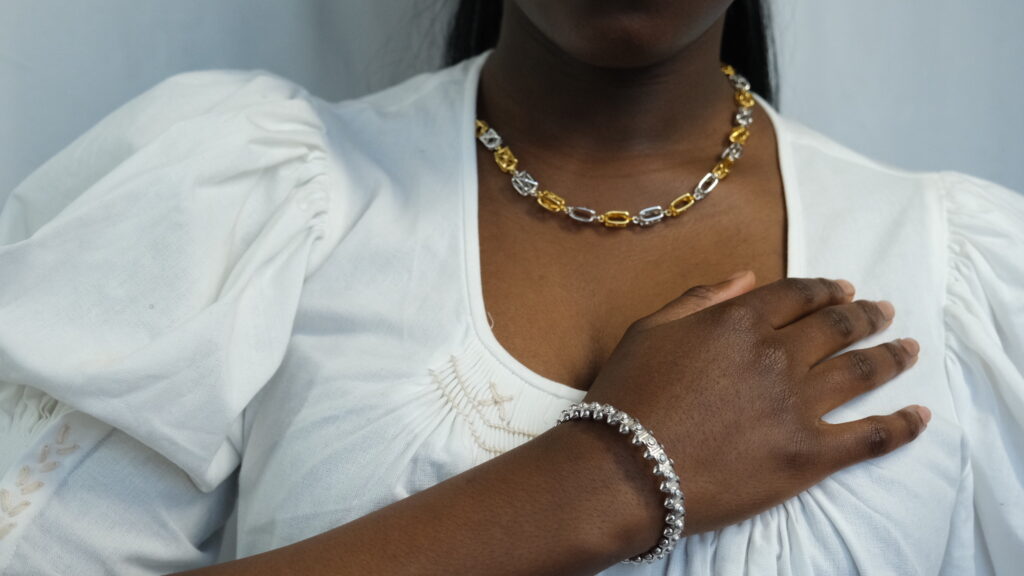
Mixing Gold and Silver Jewelry in Real-World Contexts: From Office to Evening
Mastering mixed-metal styling in theory is one thing. Applying it across different contexts—professional environments, formal events, casual weekends, and everything in between—requires understanding how intentionality shifts based on setting.
Professional and Office Styling:
Conservative workplaces often call for subtlety when mixing gold and silver jewelry. Anchor with classic, minimal pieces in your dominant metal—a simple gold watch, delicate gold studs—and add one or two silver accents: a silver ring, a thin silver bracelet. The mixed metals feel current and sophisticated without overwhelming traditional professional dress codes. Avoid excessive stacking or bold statement pieces that might read as distracting in formal business contexts.
Bridal and Special Occasions:
Mixing gold and silver jewelry at weddings and formal events requires extra intentionality. If your engagement ring is platinum or white gold, you might wear silver or white gold jewelry as your anchor and add warm gold accents through earrings or a bracelet. If your ring is yellow gold, reverse the approach. The goal: create cohesion with your most significant jewelry (the ring) while still incorporating mixed metals for modern elegance. Brides increasingly choose two-tone wedding bands specifically to maximize jewelry versatility for years to come.
Everyday Casual:
Casual contexts offer maximum freedom for mixed-metal experimentation. This is where you can stack freely, layer boldly, and play with asymmetry. Jeans and a white t-shirt become exponentially more interesting with mixed-metal rings across multiple fingers, layered gold and silver necklaces, and mismatched metal earrings. The relaxed setting gives you permission to treat jewelry as creative expression rather than restrained accessory.
Evening and Cocktail Styling:
Evening events invite drama, and mixed metals deliver. Consider pairing a substantial silver cuff with gold chandelier earrings and layered gold necklaces. Or anchor with multiple gold pieces and add a single show-stopping silver ring. The contrast between metals amplifies visual impact, making your jewelry feel more dynamic than monochromatic metal suites ever could. Just ensure at least one element—metal finish, design aesthetic, or overall proportion—creates cohesion across the combination.
Minimalist Mixed-Metal Approaches:
Not every mixed-metal look requires maximalist stacking. Some of the most elegant combinations involve just two or three pieces total: a gold watch, silver hoop earrings, and a simple gold ring. The restraint lets each piece breathe while the metal contrast provides all the visual interest needed.
Maximalist Mixed-Metal Approaches:
If you love abundant jewelry, mixed metals can feel even more compelling than single-metal maximalism. The key is maintaining some organizing principle—perhaps all pieces share similar design aesthetics (vintage-inspired, modern minimalist, bohemian), or you deliberately alternate metals in a rhythmic pattern across your body. Maximalism without intention feels chaotic. Maximalism with structure feels confident and editorial.
Caring for and Storing Mixed Metals:
When you regularly mix gold and silver jewelry, proper care becomes essential. Store pieces separately to prevent scratching (gold is softer than silver). Polish each metal with appropriate cleaners—what works for gold can damage silver and vice versa. Remove all jewelry before swimming, showering, or applying lotions and perfumes to prevent tarnishing and preserve finishes.
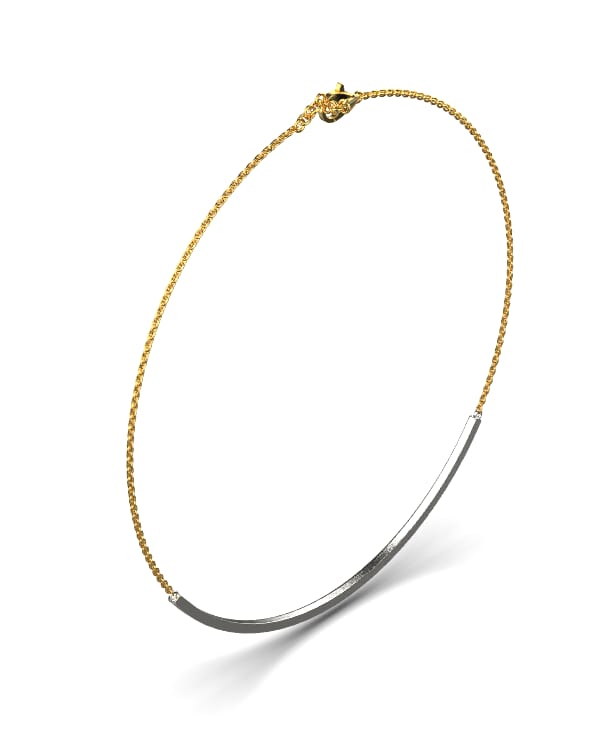
Why Mixing Gold and Silver Jewelry Defines 2026 Style Confidence
The retirement of the “never mix metals” rule represents something far larger than a shift in jewelry trends. It reflects fashion’s broader evolution toward personal expression over prescriptive formulas, toward individual style confidence over adherence to arbitrary restrictions.
When you expertly mix gold and silver jewelry, you’re not just combining warm and cool tones—you’re participating in a cultural redefinition of what sophistication looks like. You’re choosing intentionality over matching, personal curation over ready-made sets, and visual dynamism over safe sameness.
This approach to mixing gold and silver jewelry makes every piece in your collection more versatile. That silver bracelet you thought you couldn’t wear with your gold watch? Now you can—and the combination feels more interesting than either piece alone. The gold earrings collecting dust because your rings are all silver? They’re back in rotation, creating contrast and depth you never noticed when everything matched.
Mixing metals teaches you to trust your eye, to make aesthetic decisions based on proportion and balance rather than rigid rules, and to see jewelry as an evolving conversation with your personal style rather than a static accessory choice. It’s liberating. It’s modern. And when done with the intentionality and principles outlined here, it’s utterly sophisticated.
The most important thing to remember: there’s no single “correct” way to mix gold and silver jewelry. What works for a maximalist jewelry lover who stacks rings across every finger will look completely different from what works for a minimalist who wears two pieces total. Your skin tone, your existing collection, your daily wardrobe, your personal aesthetic, your lifestyle—all of these shape how you’ll approach mixed metals most authentically.
The goal isn’t to follow a new set of inflexible rules. It’s to understand the underlying principles of balance, proportion, and visual cohesion so you can make informed choices that feel genuinely yours. Start small if you’re uncertain: a gold watch with silver rings, a silver necklace with gold earrings. Build from there as your confidence grows. Experiment with different ratios of warm to cool metals. Pay attention to what makes you feel most yourself.
Because ultimately, that’s what mixing gold and silver jewelry is really about—not trend-chasing or rule-breaking for its own sake, but creating combinations that make you feel confident, contemporary, and completely at ease in your own style authority. That’s the kind of sophistication that never goes out of fashion.