

Precious Metals
GOLD VS PLATINUM RING: WHICH HIGH-END METAL WINS FOR WEDDING BAND DURABILITY?
A diamond cut is a key factor to consider when choosing your next piece of diamond jewelry.
By Chinwe, Chief Creative Officer
The Metal Mythology Ends Here: What 50 Years of Daily Wear Actually Reveals About Gold and Platinum Performance
When you’re standing in a jeweler’s showroom holding two nearly identical wedding bands—one gold, one platinum—the difference between them isn’t just weight or price. It’s decades of scratches you haven’t seen yet, maintenance appointments you haven’t scheduled, and wear patterns that won’t reveal themselves until your tenth anniversary. The gold vs platinum ring debate isn’t about which metal looks better on your hand today. It’s about which one will still be there, intact and beautiful, when you’re celebrating your golden anniversary.
Every engaged couple navigating the gold vs platinum ring decision faces the same frustrating reality: jewelers speak in absolutes that contradict each other, online forums overflow with conflicting anecdotes, and the actual science of metal durability gets buried under sales scripts and status symbol mythology. You’re told platinum is “practically indestructible” in one store, then warned it “scratches if you look at it wrong” in the next. Gold is simultaneously “too soft for daily wear” and “the time-tested choice that’s lasted millennia.”
The truth? Neither metal is invincible, and neither is inadequate. The gold vs platinum ring question is fundamentally about matching metal behavior to your life—not chasing an idealized notion of “best” that ignores how you actually live, work, and move through the world.
Understanding the gold vs platinum ring durability showdown requires something jewelry marketing rarely provides: honest material science, real-world wear data, and an acknowledgment that your gym routine, career, and personal maintenance threshold matter more than vague promises of “lifetime durability.” This isn’t about prestige hierarchies or aesthetic trends. It’s about physics, chemistry, lifestyle compatibility, and what “forever” actually means when a ring lives on your hand through dishes, deadlifts, diaper changes, and decades of daily life.
This guide will explore the following:
What durability actually means in the gold vs platinum ring context—and why hardness, density, and wear patterns tell completely different stories
The scratch resistance myth: how gold and platinum surfaces age, patina, and maintain (or lose) their finish over time
Weight, comfort, and wearability: why the gold vs platinum ring density difference matters for all-day wear and long-term comfort
Maintenance realities: polishing schedules, rhodium plating, professional care, and the hidden costs of keeping each metal looking its best
Lifestyle matching: which metal survives (and thrives) under your specific wear conditions—from desk jobs to manual labor, marathon training to daily swim routines
Resizing, repair, and long-term serviceability: what happens when your gold vs platinum ring needs work twenty years from now
Investment value and metal loss: how each option holds its worth, wears down, and retains material over decades
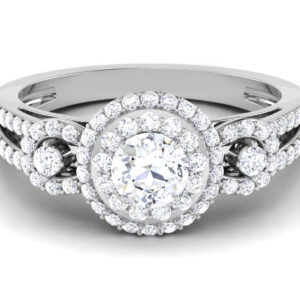
The first and most important thing to understand about the gold vs platinum ring comparison is that “durability” isn’t a single property. It’s a constellation of different performance characteristics—scratch resistance, dent resistance, material retention, structural integrity, tarnish resistance—that behave independently and often contradictorily. Platinum excels in some areas where gold falters. Gold outperforms platinum in others. And the metal that wins in a laboratory stress test might lose spectacularly in your real life.
When jewelers talk about the gold vs platinum ring durability showdown, they often conflate hardness with durability, or density with strength.
These are different properties that create different outcomes.
Platinum is denser than gold—significantly so. A platinum ring weighs about 60% more than an identical gold ring. That density means platinum is physically more difficult to deform or bend out of shape. If you accidentally slam your hand in a car door, a platinum band is more likely to hold its circular form than a gold one. The metal’s atomic structure resists compression and distortion under impact.
But density doesn’t equal hardness.
Platinum is actually softer than many gold alloys on the Mohs scale. An 18k white gold ring (typically alloyed with palladium or nickel for strength) registers harder than 95% platinum. What does this mean practically? Gold resists surface abrasion better in many contexts. A gold ring dragged across concrete might show less immediate surface disruption than platinum under the same conditions.
Here’s where the gold vs platinum ring narrative gets interesting: gold wears away; platinum displaces. When a gold ring encounters abrasive contact—scraping against weights at the gym, rubbing against a desk edge, catching on fabric—microscopic particles of gold are actually removed from the surface.
Over decades, this material loss is measurable. You can lose a tenth of a gram or more from a gold wedding band worn for thirty years in active conditions.
Platinum doesn’t wear away in the same manner. Instead, the metal moves. When platinum gets scratched, the material isn’t removed—it’s displaced to a new location on the ring’s surface.
This creates the characteristic “patina” platinum develops over time: a textured, slightly matte finish that results from thousands of tiny scratches redistributing the metal rather than removing it. You don’t lose platinum material to abrasion. But you do lose the mirror polish.
What This Means for Your Gold vs Platinum Ring Decision
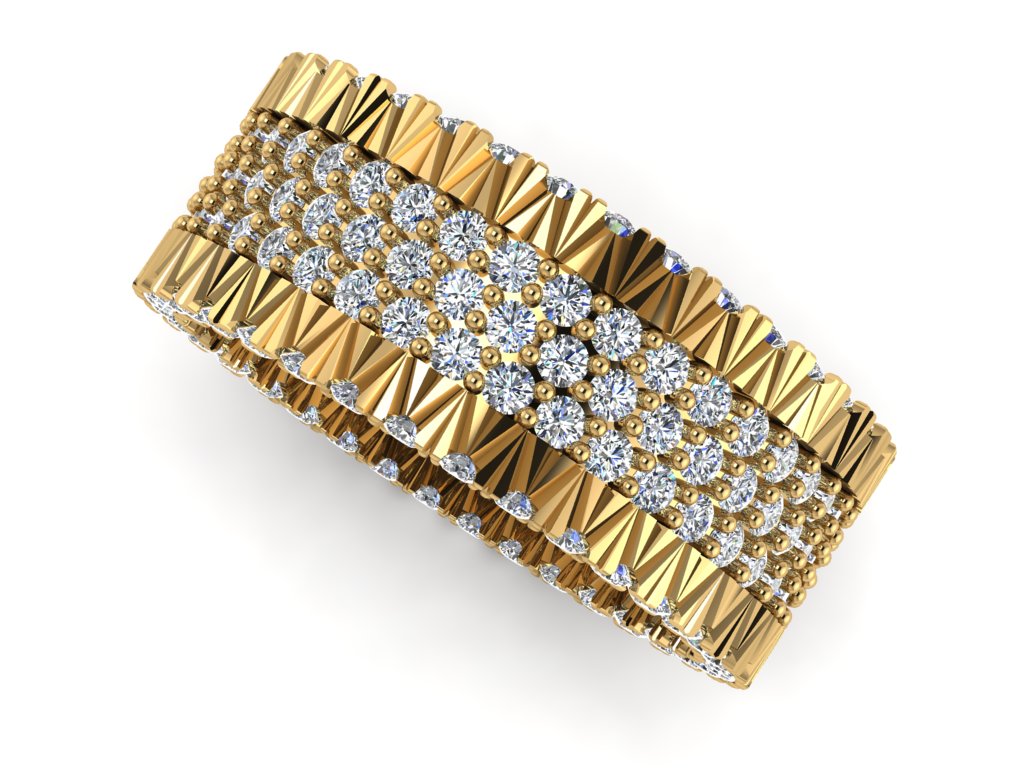
If you’re someone who can’t tolerate visible scratches and wants a perpetually polished surface, the gold vs platinum ring calculus shifts. Platinum will show surface marring almost immediately—not because it’s weak, but because every contact event redistributes rather than removes metal, creating visible texture. Gold can be polished back to a mirror finish more easily and will hold that finish longer between professional maintenance visits.
If you’re someone who works with your hands, lifts heavy objects, or has a career that involves repeated impact, platinum’s superior dent resistance becomes the deciding factor in the gold vs platinum ring comparison. Gold will bend, warp, or dent under conditions where platinum holds its shape. A gold ring worn by a carpenter, mechanic, or healthcare worker handling equipment is more likely to require reshaping over time.
But if you’re minimizing ring maintenance and want a “set it and forget it” option, gold’s lower initial polish and slower patina development might make it the winner in your gold vs platinum ring evaluation—even though platinum technically retains more material over time.
The durability paradox is real: the “tougher” metal (platinum) shows wear faster visually, while the “softer” metal (gold) can be maintained to look newer longer, even as it physically loses material. Your definition of durability determines which metal wins your personal gold vs platinum ring matchup.
-
Asscher Cut Ring 18K Rose Gold- 0.20ct
18K Rose Gold
£4,025 Select options This product has multiple variants. The options may be chosen on the product page -
Choupette Ring – 18K Rose Gold 2.6ct
18K Rose Gold
£4,543 Select options This product has multiple variants. The options may be chosen on the product page -
Eternity Gap Band Ring – 18K Gold 0.12ct
18K Gold
£2,372 Select options This product has multiple variants. The options may be chosen on the product page
Let’s address the single most perpetuated myth in the gold vs platinum ring conversation: that platinum “doesn’t scratch.” This claim is materially false. Platinum scratches easily. What makes the gold vs platinum ring scratch resistance comparison nuanced is that how each metal responds to scratching creates fundamentally different long-term surface characteristics.
The First Month: When New Ring Shine Meets Reality
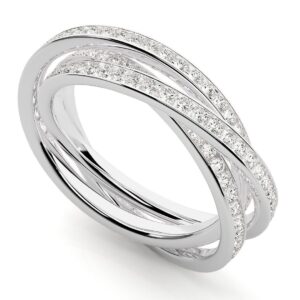
In the first weeks of wear, a polished platinum ring will show fine surface scratches from activities that wouldn’t mark a 14k gold ring: typing on a keyboard, reaching into a pocket, brushing against fabric. If you’re comparing a gold vs platinum ring in terms of maintaining that “just bought” appearance, gold wins decisively.
An 18k white gold ring (especially one with rhodium plating) will hold a mirror polish significantly longer. The harder alloy resists the micro-abrasions that immediately texture platinum.
By the first anniversary, the gold vs platinum ring surface comparison becomes stark. Platinum will have developed a visible patina—a slightly satin, textured finish from thousands of microscopic scratches overlapping. This patina is permanent unless professionally repolished.
Some wearers love this patina. It gives the ring character and creates a vintage, lived-in aesthetic. Others hate it, perceiving the textured surface as “damaged.”
Gold will show different wear patterns. 14k gold typically maintains better surface integrity than 18k because the higher alloy content creates a harder surface. But gold will also show scratches—they’re just deeper and fewer than platinum’s surface redistributions.
The Long-Term Picture
A decade into wearing a gold vs platinum ring, the differences become undeniable. If you lift weights regularly, both metals will show wear on the underside where they contact barbells. But platinum will have redistributed into the ring’s grooves, creating a thicker texture in contact areas. Gold will have worn away, creating visible thinning in those zones.
Manual laborers, healthcare workers, and people who work with chemicals see the starkest differences. Platinum’s chemical inertness means it won’t tarnish, corrode, or oxidize even with repeated exposure to cleaning products, chlorine, or industrial substances. Gold—especially lower-karat gold—can develop surface discoloration from chemical exposure.
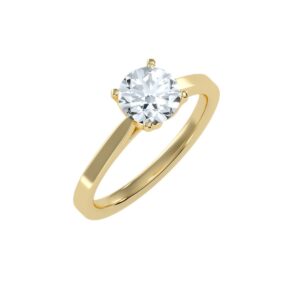
The first time you hold a gold vs platinum ring of identical dimensions, the weight difference is immediately obvious. Platinum’s density means a platinum band feels substantially heavier—about 60% more mass for the same volume. For some wearers, this weight is luxurious and grounding. For others, it’s uncomfortable and fatiguing.
Adjustment Period and Finger Fatigue
New ring wearers often report that a platinum band feels “heavy” in ways a gold ring doesn’t. Some people adapt quickly and appreciate the heft. Others find it distracting even after months of wear.
Here’s something jewelers rarely discuss in the gold vs platinum ring sales conversation: finger fatigue is real for some platinum wearers. People with smaller hands, thinner fingers, or whose work involves repetitive hand movements—typing, playing instruments, surgery, assembly work—are more likely to experience this. The cumulative effect of moving a heavier ring through space hundreds of times per hour can create subtle hand tension.
Gold rings don’t generate this phenomenon at the same intensity. The lighter weight makes gold more ergonomically neutral for people whose livelihoods depend on fine motor control and hand endurance.
The gold vs platinum ring weight differential amplifies as band width increases. A 2mm platinum band might feel comfortable, but an 8mm platinum band becomes substantially heavier. Men’s wedding bands, which trend wider, see this effect most dramatically. A traditional 6-8mm men’s platinum band can weigh 15-20 grams. The equivalent gold band weighs 9-12 grams.
Activity-Specific Considerations
Athletes face different gold vs platinum ring weight considerations depending on their sport. Rock climbers and gymnasts often find platinum rings problematic because the extra weight affects grip security. Swimmers sometimes prefer platinum’s heft because it feels more secure in water.
Some platinum wearers report that the ring’s weight makes it more noticeable during sleep—particularly for people who sleep with hands near their face. The extra mass creates more pressure against skin, which can interrupt sleep or cause morning discomfort.
-
Aku Wave Ring – 18K Gold
18K Gold
£3,094 Select options This product has multiple variants. The options may be chosen on the product page -
Arc Ring – 18K Rose Gold 0.24ct
18K Rose Gold
£3,048 Select options This product has multiple variants. The options may be chosen on the product page -
Oval Tied Fine Chain Necklace – 18K Yellow Gold, White Gold
18K Yellow Gold, White Gold
£4,298 Select options This product has multiple variants. The options may be chosen on the product page
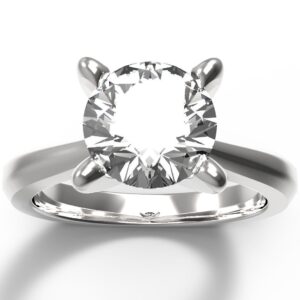
The gold vs platinum ring marketing narrative often positions both metals as “low maintenance.” This is aspirational fiction. Both metals require care, professional servicing, and ongoing maintenance—but the type, frequency, and cost differ significantly.
Rhodium Plating: The White Gold Maintenance Burden
If you’re considering white gold in your gold vs platinum ring evaluation, understanding rhodium plating is non-negotiable. White gold isn’t naturally white—it’s yellow gold alloyed with white metals that create a pale champagne tone. To achieve bright white appearance, white gold rings are plated with rhodium.
Rhodium plating wears off. Most white gold rings need replating every 12-36 months. The cost ranges from $50-150 per replating. Over a fifty-year marriage, that’s 15-50 replating sessions costing $750-$7,500 cumulatively.
Platinum requires no plating. Its natural white color is permanent. This is one of the most significant practical differences in the gold vs platinum ring maintenance comparison.
Yellow or rose gold eliminates this maintenance requirement entirely. If you’re evaluating a gold vs platinum ring primarily on maintenance burden, yellow gold is actually the lowest-maintenance option among all three choices.
Polishing Frequency and Material Loss
Platinum develops patina quickly and requires more frequent polishing to maintain a mirror finish—potentially every 6-12 months. But because platinum displaces rather than loses material, you can polish it dozens of times without structurally compromising it.
Gold holds its polish longer but loses material with each polishing. A jeweler removes a thin layer of gold to eliminate scratches. After decades and multiple polishings, a gold ring can lose enough material to affect structural integrity.
Chemical Exposure and Lifestyle Realities
Platinum is extraordinarily chemically inert. It doesn’t tarnish, oxidize, or react with virtually anything you’ll encounter in daily life. You can wear a platinum ring through bleach-based cleaning, chlorine pools, ocean swimming, and industrial chemical work without compromising the metal.
Gold—especially lower-karat gold—is more reactive. The alloy metals can oxidize, tarnish, or discolor when exposed to certain chemicals repeatedly. Chlorine is particularly problematic for gold, potentially causing “chlorine pitting.”
-
Eternity Merged Ring 0.20ct – Platinum
Platinum 950
£1,692 Select options This product has multiple variants. The options may be chosen on the product page -
Platinum Round Brilliant Cut Wedding Engagement Ring 1.29ct
Platinum 950
£11,270 Select options This product has multiple variants. The options may be chosen on the product page -
Round Brilliant Cut Wedding Engagement Ring 18K Gold- 1.29ct
18K Gold
£12,219 Select options This product has multiple variants. The options may be chosen on the product page
5. The Lifestyle Matching Framework: Which Gold vs Platinum Ring Survives Your Actual Life?
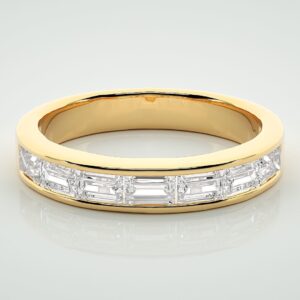
The most useful way to resolve your gold vs platinum ring decision is to map each metal’s characteristics against your specific daily behaviors and occupational demands.
Desk Workers and Office Professionals
If your hands spend most time on keyboards and managing paperwork, the gold vs platinum ring equation tilts toward gold. Platinum’s rapid patina development from keyboard contact bothers many office workers. Gold holds its shine better in these low-impact conditions.
Manual Laborers, Tradespeople, and Healthcare Workers
For people whose hands are their tools—carpenters, electricians, mechanics, nurses, surgeons—the gold vs platinum ring decision should prioritize structural integrity and chemical resistance over aesthetics.
Platinum’s density and dent resistance make it superior for work involving repeated impacts or tool use. A gold ring worn by a carpenter will bend within months. A platinum ring will develop heavy patina but maintain its structural integrity.
Healthcare workers benefit from platinum’s inertness with constant hand sanitizer use, surgical scrubbing, and exposure to medical chemicals that can discolor gold.
Athletes and Fitness Enthusiasts
Strength athletes and CrossFitters face punishing conditions. Platinum is marginally better for weightlifters because it resists bending, but both metals will show extreme wear. Many serious lifters opt for silicone performance bands during workouts.
Swimmers should consider platinum for its chlorine resistance. Runners and cyclists might prefer gold’s lighter weight if they notice hand fatigue during long efforts.
Creative Professionals
Artists working with oil paints, solvents, or patina chemicals should consider platinum’s chemical inertness. Chefs encounter constant moisture, temperature fluctuations, acidic foods—platinum’s chemical resistance makes it more durable in professional kitchens.
Musicians whose instruments require finger dexterity often prefer gold’s lighter weight. Pianists, guitarists, and string players report that platinum’s mass can affect hand fatigue during long sessions.
-
Serenade Wedding Ring – 18K Gold 0.25ct
18K Gold
£1,850 Select options This product has multiple variants. The options may be chosen on the product page -
Serenity Band Ring – 18K Gold – 1.19ct
18K Gold
£3,191 Select options This product has multiple variants. The options may be chosen on the product page -
Trilogy Baguette Eternity Band Ring – 18K Gold – 0.74ct
18K Gold
£3,623 Select options This product has multiple variants. The options may be chosen on the product page
6. Investment Value and Material Economics
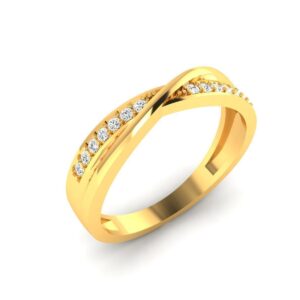
The gold vs platinum ring decision carries financial dimensions beyond initial purchase price.
Initial Purchase Price
Platinum rings typically cost 40-60% more than comparable gold rings. This reflects platinum’s rarity (roughly 30 times rarer than gold) and increased labor cost. If you’re quoted $2,000 for a gold band, expect $2,800-$3,200 for the identical design in platinum.
White gold offers a middle ground: similar aesthetics to platinum at a price closer to yellow gold. But factor in lifetime rhodium plating costs when evaluating true price.
Material Retention and Value
Gold’s wear-away pattern means you’re losing material over decades. A gold ring that started at 10 grams might be 9.2 grams after thirty years. You’ve literally worn away $500-1000 of gold through normal use.
Platinum’s displacement behavior means you retain virtually all the material you purchased. This makes platinum the better long-term investment from a pure material economics perspective—though this only matters if you plan to sell the ring.
Lifetime Cost Analysis
14k Yellow/Rose Gold: Lowest ongoing costs (no plating, infrequent polishing, easier/cheaper repairs)
14k/18k White Gold: Moderate initial cost, highest ongoing costs (rhodium replating every 1-3 years)
Platinum: Highest initial cost, moderate ongoing costs (more expensive but less frequent maintenance)
Making the Choice: Your Personal Gold vs Platinum Ring Decision Framework
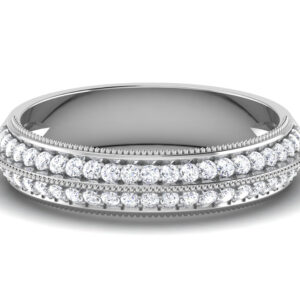
After examining material science, wear characteristics, and lifestyle considerations, the gold vs platinum ring decision should feel less like choosing the “correct” metal and more like matching properties to your priorities.
Choose Gold If:
You want a lighter ring that feels less intrusive
You prefer a metal that holds polish longer between maintenance
You work in low-impact environments where aesthetics matter more than dent resistance
You want the lowest initial price and most accessible repairs
You’re choosing yellow or rose gold and want to eliminate plating maintenance
You appreciate gold’s warmth and traditional wedding jewelry associations
Choose Platinum If:
You never want to think about rhodium plating or color fading
You work with your hands in high-impact conditions
You’re exposed to chemicals, chlorine, or harsh substances regularly
You appreciate substantial weight and perceive it as quality
You prefer a metal that develops natural patina rather than requiring frequent polishing
You value material retention over decades
You want maximum chemical inertness and hypoallergenic properties
-
Basket Ring – 18K Gold, White Gold
18K Yellow Gold, White Gold
£2,344 Select options This product has multiple variants. The options may be chosen on the product page -
Constellation Bracelet – Platinum
Platinum 950
£22,661 Select options This product has multiple variants. The options may be chosen on the product page -
Oval Tied Fine Chain Necklace – 18K Gold
18K Gold
£4,298 Select options This product has multiple variants. The options may be chosen on the product page
The Bottom Line
Neither metal is categorically superior. Both can last a lifetime with appropriate care. Both will show wear patterns reflecting how you’ve lived. Both carry symbolic weight and practical trade-offs.
The “right” gold vs platinum ring choice is the one that matches your daily reality, maintenance tolerance, aesthetic preferences, and budget—not the one a jeweler tells you is “best.”
Your wedding band will be on your hand through ordinary Tuesdays and extraordinary celebrations. It will accumulate scratches, patina, memories, and meaning that far exceed its material properties. Choose the metal that serves your life—not the life you think you should be living.
The gold vs platinum ring debate ends not with a definitive winner, but with a personal answer: which metal will you still be happy to see on your hand decades from now, worn and real and yours?